France has banned a major gathering of Muslims in the northern Paris suburbs, saying it could be a terrorist target.
The four-day Annual Encounter of Muslims of France was due to open on Friday at an exhibition centre in Le Bourget, attracting tens of thousands of people from across Europe.
But according to the Paris police department, in "an international and national context which is particularly tense" the gathering was "exposed to an important terrorist risk toward the Muslim community".
The event's organisers immediately sought an emergency injunction to allow it to go ahead, and a ruling was expected during the day.
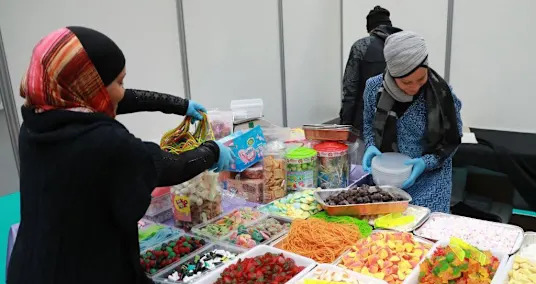
Part cultural and religious conference, part trade fair, the Muslim gathering used to be annual, but has in fact not been held since 2019.
It is organised by the Muslims of France (MF), a group which critics say is close to the international Muslim Brotherhood.
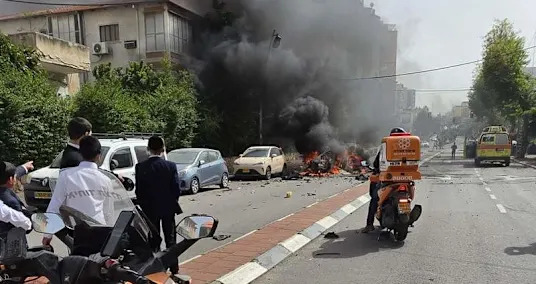
Explaining its decision to ban, the police department said that a failed fire-bomb attack last weekend in Paris against an American bank underlined the "seriousness of the homegrown threat."
Four people, including three minors, face charges in relation to the incident, which investigators believe may have been ordered by a pro-Iran group.
The police department said that "in a context of political agitation and a heavy polarisation of debate" it was possible that "small far-right groups could mobilise with a view to disrupting the event".
It also said that actions against the gathering could be "conducted remotely by foreign influences".
France has regularly accused Russia, as well as Iran, of stirring up dissension by paying proxies to carry out small-scale acts of provocation or sabotage.
The ban came as France announced plans for a new "anti-separatism" law, aimed mainly at Muslim structures promoting ideas deemed contrary to the principles of the Republic.
Interior Minister Laurent Nuñez said the aim was to complement a previous similar law, passed five years ago, which allowed the government to close associations accused of promoting Islamic separatism.
"There are still some structures which we have been unable to reach," he told news channel BFMTV. "One issue is how we control collective childcare. We need to be able to control it, but right now we can't.
"More generally we want to be able to ban publications which carry appeals to hate, violence or discrimination," he said.
The MF's lawyer, Sefen Guez Guez, told the injunction hearing that banning the event was a "manifest breach of the right to assemble" and clearly aimed at "promoting the [government's] new law".
But a police lawyer said the sole reason was to preserve public order. "This is not an anti-Muslim or anti-Islam decree," he said.
LATEST POSTS
- 1
 10 Distinct Kinds of Chinese Neighborhood Specialty Hot Pot
 - 2Astronauts welcome arrival of new crewmates | On the International Space Station this week Nov. 24-28, 2025
- 3Massachusetts court hears arguments in lawsuit alleging Meta designed apps to be addictive to kids
- 4Want to be better about saving money in 2026? Try these money-saving tips for having a ‘low-buy’ January and beyond
- 5Texas cities have some of the highest preterm birth rates in the US, highlighting maternal health crisis nationwide


- New law puts familiar drinks, creams and gummies in legal limbo
- 2026 will be the year NASA astronauts fly around the moon again — if all goes to plan
- How did Hugh Jackman nail his latest role? Sequins, tighty-whities and embracing 'zero embarrassment.'
- Israeli archaeologists launch project to trace origins of ancient pottery
- NASA unveils close-up pictures of the comet popping by from another star
- Day to day Temporary Positions That Compensate Fairly in the US
- IDF confirms Iranian missile fragments hit near Kirya, multiple cars ablaze in Ramat Gan
- Prehistoric wolf’s gut frozen in time reveals an ice age giant
- Etymological Experiences on the Wireless transmissions: A Survey of \Learning in a hurry\ Language Web recording