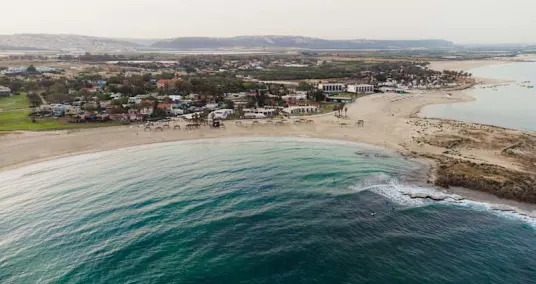
The discovery was made in an ancient shipwreck in the Dor Lagoon near the Carmel Coast, where archaeologists recovered nine pieces of unprocessed iron known as “blooms.”
Researchers from the University of Haifa said Wednesday that an underwater excavation off Israel’s northern Mediterranean coast uncovered what they described as the earliest known cargo of raw iron transported by ship, dating back around 2,600 years, Xinhua reported.
The discovery was made in an ancient shipwreck in the Dor Lagoon near the Carmel Coast, where archaeologists recovered nine pieces of unprocessed iron known as “blooms.” According to the university, the find provides direct evidence of how iron was transported in its earliest commercial stages.
The material was preserved in its original form, having solidified directly in a smelting furnace without undergoing forging or further refinement. Researchers said this distinguishes the cargo from later iron artifacts that typically show signs of shaping or tool-making.
Unlike copper and bronze, which could be melted into liquid form in ancient production processes, iron was heated with charcoal to produce a solid, porous mass. That mass was generally hammered to remove impurities and create denser material suitable for tools and implements.
The recovered blooms showed no indication of that secondary processing stage, suggesting they were transported immediately after production.

Earliest iron shipment discovered in ancient Mediterranean wreck
To determine the age and condition of the cargo, researchers conducted microscopic and chemical analyses.
Radiocarbon dating was also carried out on charred wood embedded in one of the pieces, helping confirm the timeline of the shipment. The findings were published in the journal Heritage Science.
Researchers said the cargo indicates that iron was being moved in raw form from production sites to other locations for further processing, pointing to a level of specialization in ancient manufacturing and trade networks in the Mediterranean.
The University of Haifa said the discovery provides new insight into early iron production and distribution practices in the region.
LATEST POSTS
- 1
 How is 'A Knight of the Seven Kingdoms' connected to 'Game of Thrones'?
 - 2Map shows more than 1,900 measles cases across U.S.
- 3Winter storm headed for Midwest to Northeast. Here's how much snow to expect.
- 4Wedding trip Objections in the US
- 5Instructions to Pick the Right Dental Expert for Teeth Substitution


- Washington resident contracts bird flu, first human case in U.S. since February
- What we know about Jonathan Ross, the ICE agent who shot and killed Renee Nicole Good in Minneapolis
- Popular Japanese Hotel Chain Now Lets You Show Up With Just Your Passport
- Vote In favor of Your Number one Savvy Beds
- 2025 Was Another Exceptionally Hot Year
- Mountain Trekking on a Tight spending plan: Tracking down the Right Bicycle
- Grasping Wrongdoings and Crimes: A Correlation
- Vote in favor of Your Number one Smartwatch: Exactness and Style Matter
- True serenity: Investigating Emotional well-being and the Advantages of Contemplation