EU member states agreed on Thursday to create a legal basis for the use of Russian state assets for Ukraine by majority vote, so as to permanently prevent the funds from being returned to Russia, the Danish EU presidency announced.
This means countries such as Hungary will not be able to veto future EU sanctions decisions extending the current freeze on Russian assets held in the bloc.
At present, Russian assets held in the EU are frozen under a sanctions mechanism that needs to be renewed every six months - an arrangement that prevents the planned use of Russian assets to fund long-term credits for Ukraine.
To block the money indefinitely, member states are invoking a legal article allowing the adoption of appropriate measures by a majority - at least 15 of the EU's 27 states, representing 65% of the bloc's population - in the event of severe economic difficulties.
According to the legal text, Russia's war on Ukraine is causing severe economic challenges. The transfer of funds to Russia must therefore be urgently prevented to limit harm to the EU economy.
The regulation is set to be adopted before an EU summit in Brussels next week.
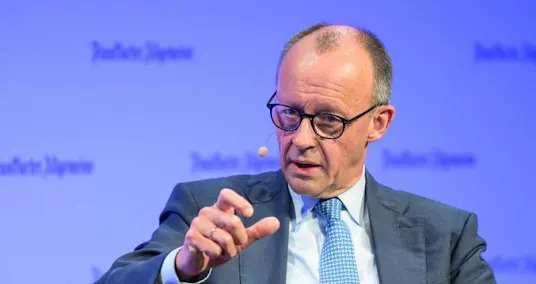
By then at the latest, backers of the plan - including German Chancellor Friedrich Merz - also hope to win over Belgian Prime Minister Bart De Wever for the proposed loan scheme.
Without Belgium, where the lion's share of Russian funds earmarked for Ukraine is held by Euroclear, the implementation of the scheme is considered extremely difficult.
Euroclear holds about €185 billion ($217.5 billion) of a total €210 billion in Russian assets held in the EU.
The Belgian government has so far blocked the plan, citing legal and financial risks.
It fears in particular that Moscow could retaliate against European private individuals and companies, for example through expropriations in Russia.
De Wever has set three conditions for Belgian participation.
There must be a guarantee that all potential risks are mutualized among member states and that sufficient financial guarantees are in place from the start to meet any obligations.
He also called for comprehensive liquidity and risk protection for all citizens or companies affected by the plan, and for the involvement of all other EU countries where Russian central bank assets are frozen.
That includes Germany, France, Sweden and Cyprus, according to the European Commission.
Thursday evening, EU Commission President Ursula von der Leyen said Belgium's concerns were understood and a solution is being worked on intensively.
Meanwhile, Hungary strongly rejected Thursday's decision, saying it is "deeply concerned by the recent tendency of circumventing unanimous decision-making procedures" in EU foreign and security policy.
The government stated that it reserves the right to challenge the decision at the European Court of Justice, the EU's top court.
LATEST POSTS
- 1
 The most effective method to Alter Your Savvy Bed for A definitive Rest Insight
 - 2Merz says army could be involved in mine-clearing from Hormuz
- 3Palestinian leader Abbas says elections only after Gaza war ends
- 4Monetary Versatility: Get ready for Life's Unforeseen Difficulties
- 5NASA troubleshoots Artemis II toilet problem in otherwise smooth flight




- Toyota Reports 2.3% Sales Drop as China Weakness Deepens
- What really happens when 140 reality stars come face to face with their biggest fans
- 10 Work Valuable chances to Assist with supporting Your Advanced degree
- Nestlé recalls infant formula in 49 countries. See list.
- Voting begins in Uganda’s presidential election during internet shutdown and polling station delays
- Figure out How to Pick a SUV with Senior-Accommodating Tech Elements
- First foreign troop in new gang suppression force lands in Haiti to replace previous mission
- Is Trump going to war with Venezuela?
- Find the Standards of Powerful Cooperation: Accomplishing Cooperative energy and Coordinated effort